Evidence · 27 Nov 2026
Handwriting recognition:
what the 99.98% means.
A 41-class model for handwritten uppercase Cyrillic symbols. This page documents the evaluation, the dataset audit, the exact artefacts, and the limits of the claim — so the result can be checked, not just quoted.
01 — Scope
Uppercase symbols, one cell at a time.
The model reads one handwritten symbol per image: 10 digits, 28 uppercase-letter classes, minus, comma and an empty cell. Lowercase letters are not part of the task. The downstream exam-form layer resolves the answer type and word context.
Five visually identical letter/digit pairs are intentionally merged,
for example Ч/4 and О/0. In a word task,
С10В0 can be read as СЛОВО. The headline
accuracy is therefore symbol-level, not final-word
accuracy.
empty is a real class with 4,000 empty-cell images; it
teaches the service to skip blank cells instead of treating them as
errors. tire is the historical class name for the comma.
02 — Evidence
What was measured.
| Test | Result | What it proves |
|---|---|---|
| Top-1, training run | 99.98% | Fit on the collected training distribution. |
| Top-1, random 820-image control sample | 99.88% | A separate check on collected data, 20 images per class. |
| Top-5, same control sample | 100% | The correct class was always in the first five candidates. |
| Only control-sample error | 1 | Class 11_alf, 19/20; no other misses. |
| Corrupted images | 0 | Every file opened with Pillow. |
Exact duplicate groups outside empty | 60 | 60 files, largest group 2; roughly 0.03% of the dataset. |
| Class imbalance | 1.31× | 4,000–5,239 images per class. |
The original train/validation split was not preserved. The 820-image control is a check on collected data, not an independent test set. This page keeps that distinction explicit.
03 — Samples
Examples from the dataset.
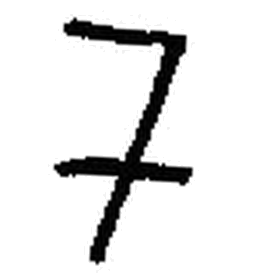
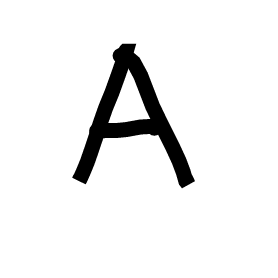
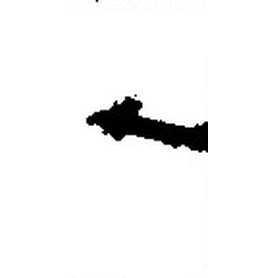
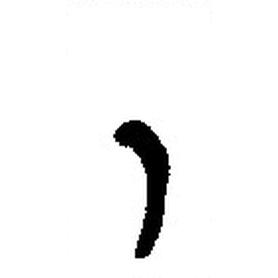
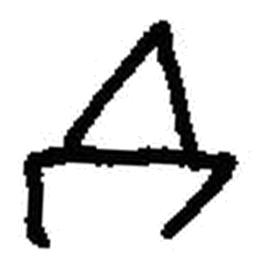
Six held-out sample images with the model's top-1 prediction and probability. The full model is downloadable; these are not cherry-picked from a private demo set.
04 — Data audit
Clean before training.
The dataset was audited with
Dataset Doctor
and --ignore-classes empty. The 4,000 empty-cell images
are byte-identical by design, so treating them as accidental
duplicates would be a false positive.
Outside empty: 0 corrupted files, 60 exact duplicate
groups (60 files), 15,830 near-duplicate groups (90,833 files) and a
class-imbalance ratio of 1.31. The near-duplicate list is dominated by
legitimate same-class variation (minus,
tire, 4_alf); it is a review list, not an
automatic deletion list.
05 — Reproduce
Run the checks yourself.
git clone https://codeberg.org/nobody-fullstack/handwriting-ai
cd handwriting-ai
python -m venv .venv
.\.venv\Scripts\Activate.ps1        # Windows
pip install -r requirements-serve.txt

# API tests use a fake model; TensorFlow is not needed for this step
pytest tests/test_serve.py

# Model evaluation needs the dataset and weights:
#   dataset-sample.zip or dataset-full.zip from the release
python evaluate.py --weights weights\handwriting_model_278x278.h5 \
  --data-dir dataset --limit-per-class 20
Weights, sample and full dataset, and the SHA-256 checksum are attached to the v1.0.0 release. The browser demo uses a converted ONNX export of the same weights.
06 — Limits
What this does not claim.
- Not word-level accuracy. The 99.98% is per symbol / merged class.
- No independent test set. The original split was not preserved; the 820-image control is documented as a check, not a test.
- Uppercase only. Lowercase handwriting is out of scope.
- Merged classes.
Ч/4,О/0,З/3,Л/1andЬ/6-style ambiguities are resolved by the form-context layer, not by this model alone. - Demo, not production. The FastAPI demo has no authentication or rate limit; put it behind a proxy before public use.
07 — Artefacts
Everything needed to verify the claim.
The point is not that a model can fit 186k images. The point is that the claim has a reproducible trail: a public dataset, public weights, a documented audit, a control sample and explicit limits.
Open the live demo ↗